Manual vs. Automated Rollover Analysis: The Real Time Cost (and the Compliance Risk Nobody Prices In)
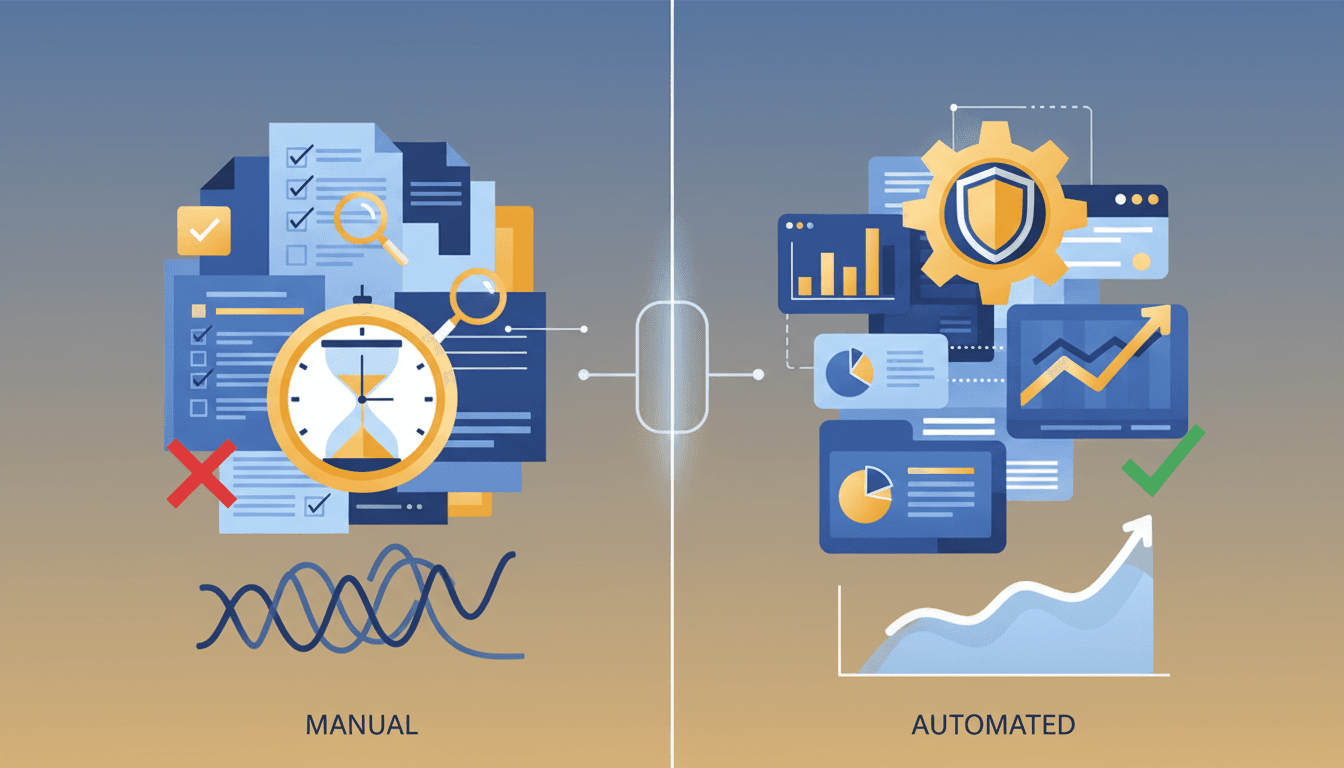
When we talk to financial professionals about rollover analysis, there's always one theme that surfaces: the true cost of time and the invisible risk that creeps in when the process isn't automated. The industry has evolved, regulations have tightened, and the demand for compliant, audit-ready documentation is at an all-time high. But many advisors are still spending hours—sometimes full workdays—on manual analysis and reporting, without realizing what that actually costs the practice, or the compliance risk that remains hidden in the background.
Manual Rollover Analysis: What Happens Behind the Scenes?
Let's walk through what a typical manual rollover analysis involves, based on our experience and thousands of advisor workflows we've studied:
- Data Collection: This is where time sinks fast. Advisors dig through Department of Labor (DOL) Form 5500 databases, inefficiently call plan administrators, and manually scan, bookmark, or summarize plan documents to extract fees, services, and core investment options. Depending on the familiarity with the plans in question, this alone can take between 2 to 3 hours per analysis.
- Comparative Fee Analysis: Next, everything must be compared side-by-side—expense ratios, administrative fees, sub-account charges, and so on—often using spreadsheets or calculators subject to entry error and formula mistakes. Advisors tell us this eats up another 1 to 2 hours on average.
- Compliance Documentation: Now the heavy regulatory lift. PTE 2020-02 and similar rules demand best interest analysis, impartial conduct standards, and a written record of alternatives considered. That means writing up the justification, attaching all required disclosures, and capturing client acknowledgments. This is tedious—2 to 4 hours to ensure nothing is missed.
- Client Presentation: Lastly, it all has to be summarized into a clear, professional report that is both understandable for clients and ready for internal or external compliance review. Formatting, QA, and final touches might consume another hour or two.
Summed up, manual analysis requires somewhere from 6 to 11 hours per case. Multiply this times several rollovers per month, or an entire book of business, and the true cost in human hours and lost opportunity becomes undeniable.
The Unseen Risk: Manual Compliance Is a Time Bomb
Manual methods aren't just slow. They're risky. Regulations require that every rollover recommendation—every single one—comes with a documented best interest analysis, a fee and service comparison, impartial conduct, and a written audit trail. When managed by hand, advisors face pitfalls:
- Omissions: Forgetting to include "reasonably available alternatives" can immediately invalidate your report under Regulation Best Interest (Reg BI) or PTE 2020-02.
- Math Errors: Missed or miscalculated fees—the kind often lurking in plan documents—risk both the client outcome and your regulatory standing.
- Inconsistent Disclosures: Templates are copied and pasted, but it's easy to forget an acknowledgment or update a market benchmark. This can trigger exemption losses, compliance inquiries, or worse.
- Recordkeeping Gaps: Without secure, centralized storage, keeping required data for 7 years is a nightmare and exposes your practice if audited.
Noncompliance isn't hypothetical. The Department of Labor can impose civil penalties of up to $135,431 per violation. Regulatory agencies now actively request audit-ready records, and any error—however small—could lead to fines, exemption loss, or public reputational damage. For deeper context on the specific requirements, our guide to PTE 2020-02 documentation is a valuable resource.
Automating Rollover Analysis: The Real Transformation
Embracing automation shifts the workflow from a time-intensive, error-prone task into a streamlined, repeatable, and compliant machine. At Simple Advisor Tools, we've seen this up close:
- Data Gathering in Minutes: With real-time access to over 500,000 employer plans in the integrated Form 5500 database, the hours spent digging through plan documents shrink to just a few clicks. Advisors can find all the key data by company name, upload fee disclosures for automatic extraction, or manually enter only what's missing.
- Automated Fee & Service Comparison: The tool instantly compares the costs, investment menus, and included services, weighting results by what matters most to the client—no complex spreadsheet formulas or second-guessing.
- Defensible Compliance Trail: Instead of laboriously writing up documentation for each client, our software generates a PTE 2020-02 aligned report for every analysis. This includes all required disclosures, best interest justifications, and client acknowledgments.
- Audit-Ready Reports Instantly: After each analysis, advisors download a fully assembled PDF—professional in appearance, ready for both client signatures and regulator review.
What's the Time Savings, Really?
Here's what we see in practice—average completion time drops from 6–11 hours to about 10–15 minutes per rollover. Advisors previously completing four to six rollovers monthly now process 20 or more, opening up time for additional clients and strategic planning instead of administrative drag.
The Bottom-Line Equation: Revenue, Compliance, and Peace of Mind
| Feature | Manual Analysis | Automated Analysis |
|---|---|---|
| Time per Case | 6–11 hours | 10–15 minutes |
| Compliance Risk | High (frequent errors, missing disclosures) | Low (PTE 2020-02 audit-ready docs) |
| Monthly Analysis Capacity | 4–6 typical | Unlimited with scalability |
| Average Revenue per Rollover | $1,500–$3,000 (but limited volume) | Same or more (with capacity to take on more business) |
| Regulatory Confidence | Low (fragmented evidence trail) | High (centralized, encrypted 7-year retention) |
What Advisors and Compliance Teams Tell Us
Feedback from our users is consistent—they are saving two to three hours per analysis, reducing compliance review time by as much as 70% for teams, and feeling less anxious about regulator requests. Solo advisors don't worry if their templates are up to date. Compliance officers have real-time dashboards looking for documentation gaps. Small teams can process enterprise-grade documentation without paying enterprise pricing.
The reality is, if you are still relying on manual processes, the risk of something being overlooked is simply too great—and the hours reclaimed through automation could be invested directly into client service or business development. The financial upside is clear, as even a single rollover can more than cover a full year of software, with every additional analysis boosting your ROI.
Getting Started: Moving From Time Sink to Scalable Practice
If you want to see the workflow in action, you can start a professional evaluation—no contracts or sales calls required. Register with your business email and within minutes you can run your own real-world scenarios, compare fees, build documentation, and see how automation changes everything. Our platform was built for independent RIAs, solo advisors, broker-dealers, and compliance teams who want results now, not weeks from now.
- If you're looking for a detailed feature and cost comparison with other tools or a full checklist to help you evaluate platforms, check out our Rollover Analysis Software: What to Look for Before You Commit.
- To understand what can go wrong during manual or automated workflows, visit our troubleshooting guide on common analysis errors.
Manual analysis is more than a "hard way"—it's a hidden tax on your time, your revenue, and your compliance posture. Automating with audit-ready, DOL-compliant tools frees you to spend less time on paperwork, reduces the risk of audit headaches, and ultimately lets you serve more clients with confidence and efficiency.
If you are ready to see how much time, stress, and risk you can remove from your rollover workflow, you can start a 14-day free trial of our automated Rollover Analysis Tool. No commitment or credit card required, just a real-world opportunity to see what modern automation looks like in your practice.
Put Your Knowledge Into Practice
Use our PTE 2020-02 compliant rollover analysis tool to streamline your compliance workflow. Start with 2 free reports — no credit card required.